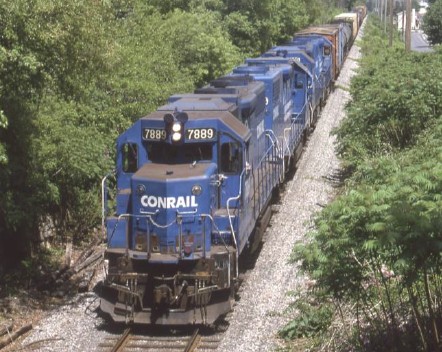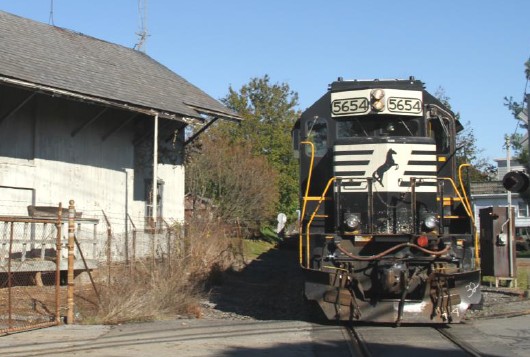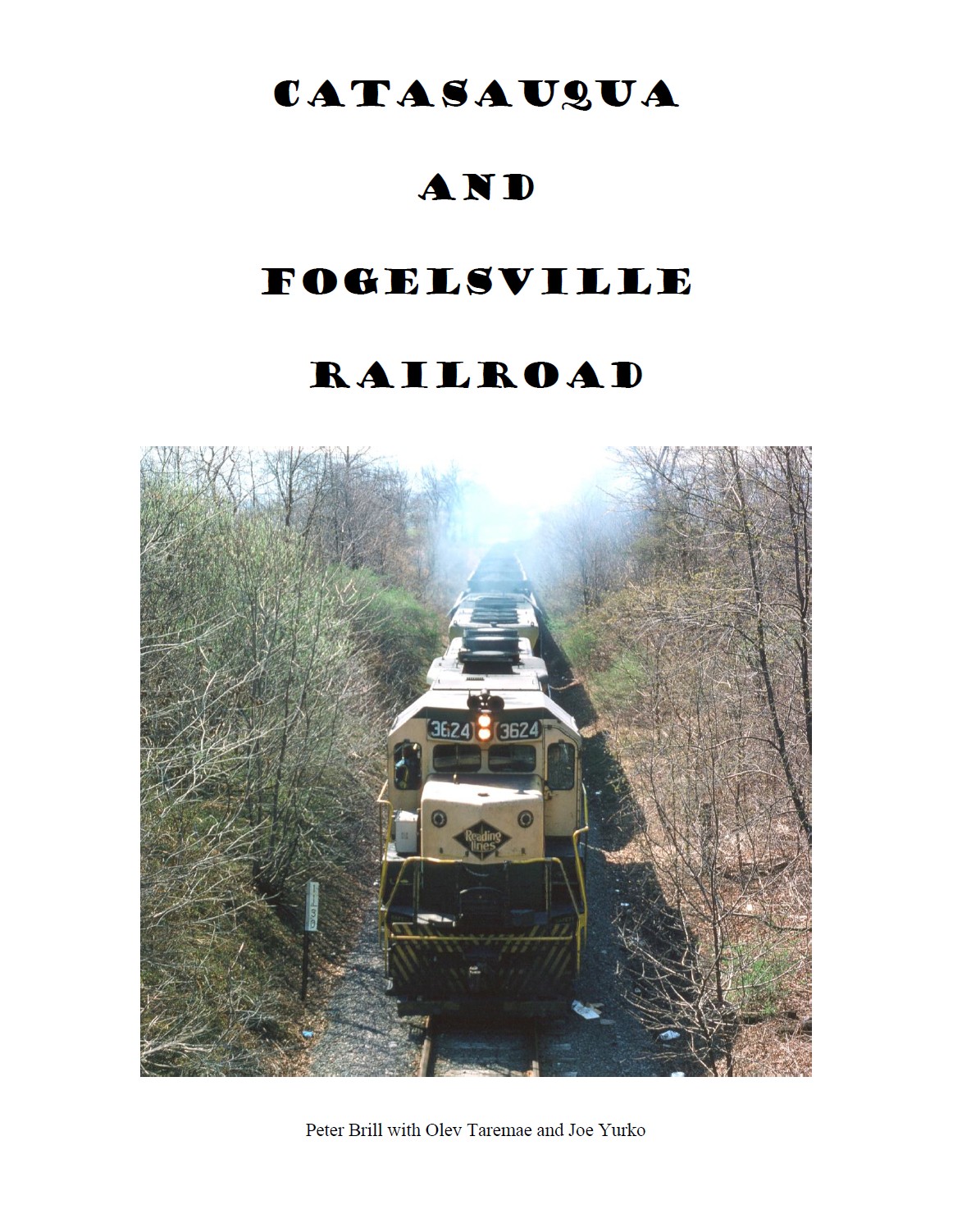
The Readings’s Catasauqua & Fogelsville Branch and the Ironton Railroad were once two connecting little roads very similar in their reliance on the anthracite iron and Portland Cement industries of the Lehigh River Valley region. They also shared in coming under the ownership of the Philadelphia & Reading/Reading although the Ironton was 50/50 owned by P&R/RDG and Lehigh Valley while the C&F would become totally owned by the P&R/RDG and operated as their Catasauqua & Fogelsville Branch.
The C&F was not some backwoods operation. Under Reading ownership, it commonly hosted 2-8-0’s, 2-8-2’s and massive 2-10-2’s, sometimes double-headed. In the 1960’s and early 1970’s, unit coal trains ran the length of the line to the Ironton connection at Catasauqua for forwarding to a trestle at Coplay for unloading.
The Ironton’s much greater reliance on the cement industry resulted in its ultimate demise while the C&F survived the death of both the anthracite iron and cement industries thanks to a broader traffic base that, beginning in the 1970’s, was greatly augmented by the coming of light manufacturing and warehousing. Thus, the C&F’s Chapman Yard was still the base for three Norfolk Southern locals as late as 2010 and NS continuedto operate the line into 2026. Huge warehouses were still being erected on the line into the early 2020’s.
This book is a history of an independent little railroad that became a branch of the P&R/RDG and then survived through the Conrail era although its eastern end was abandoned. It has lived at least a quarter century into the Norfolk Southern era. It survived the loss of its connections; the Lehigh & New England, the Lehigh
Valley and the Ironton. It survived the loss of Thomas Iron and Crane Iron traffic. It survived the loss of Lehigh Portland Cement’s Fogelsville mill. And yet it is still a viable rail line today.
158 pages, glossy paper, indexed, 82 images (80 in color), 9 maps, 37 examples of railroad paper and 23 illustrations